How to Stage Vacant Homes for Sale: 2026 Agent Guide

Table of Contents
Why Staging Vacant Homes Matters for Your Listing
Step 1: Deep Clean and Declutter Every Room
Step 2: Define Each Room's Functionality
Step 3: Choose a Neutral Palette and Refresh Paint
Step 4: Plan Furniture Placement for Flow and Focal Points
Step 5: Optimize Lighting and Boost Curb Appeal
Virtual Staging vs Physical Staging: Which Fits Your Vacant Home?
Where each approach actually wins
The cost-benefit math most guides skip
A simple decision framework
The disclosure rule you cannot skip
Cost of Staging a Vacant House: Budgeting for Success
How to size the budget
What drives the cost up or down
A worked example
Where to cut without hurting the listing
Frequently Asked Questions
Last Updated: September 20, 2026
Why Staging Vacant Homes Matters for Your Listing
Empty rooms photograph badly. That is the core problem with a vacant listing, and it costs sellers real money. A vacant home gives buyers nothing to react to: no sense of scale, no clue how a room functions, and no emotional hook. In a competitive real estate market, that silence is expensive.
This guide from REimage Real Estate Media covers how to stage vacant homes for sale without furnishing an entire house. Below, we break down a process for staging, a realistic staging budget, and the honest trade-offs between virtual and physical staging. The goal is simple: make an empty property read as a home, not a warehouse.
Key Takeaway Staging a vacant home is not about filling space. It is about giving buyers a reason to linger in listing photos, because the photo is the first showing.
Step 1: Deep Clean and Declutter Every Room
Cleaning comes first because nothing else hides dirt. Vacant homes collect dust, cobwebs, dead insects, and stale odors faster than occupied ones, and professional listing photos expose every one of them.
A common mistake is treating this as a normal clean. It is not. This is a deep clean: baseboards, window tracks, light fixtures, vents, inside cabinets, and the garage floor. Pay a professional cleaner if the budget allows, and schedule it after any painting or repairs so you are not cleaning twice.
Wash windows inside and out for better natural light
Remove all trash, leftover hardware, and abandoned furniture
Eliminate odors at the source; do not mask them with air fresheners
Clean carpets or replace them if they show wear
Step 2: Define Each Room's Functionality
Every room needs one obvious job. Buyers walking through a vacant home cannot tell a dining room from a home office, and that confusion kills offers.
Label the space visually before you bring in a single piece of furniture.
Living room: seating arrangement facing a focal point
Dining room: table and chairs, even if small
Bedrooms: a bed in every room marketed as a bedroom
Bonus rooms: pick one function and commit to it
Step 3: Choose a Neutral Palette and Refresh Paint
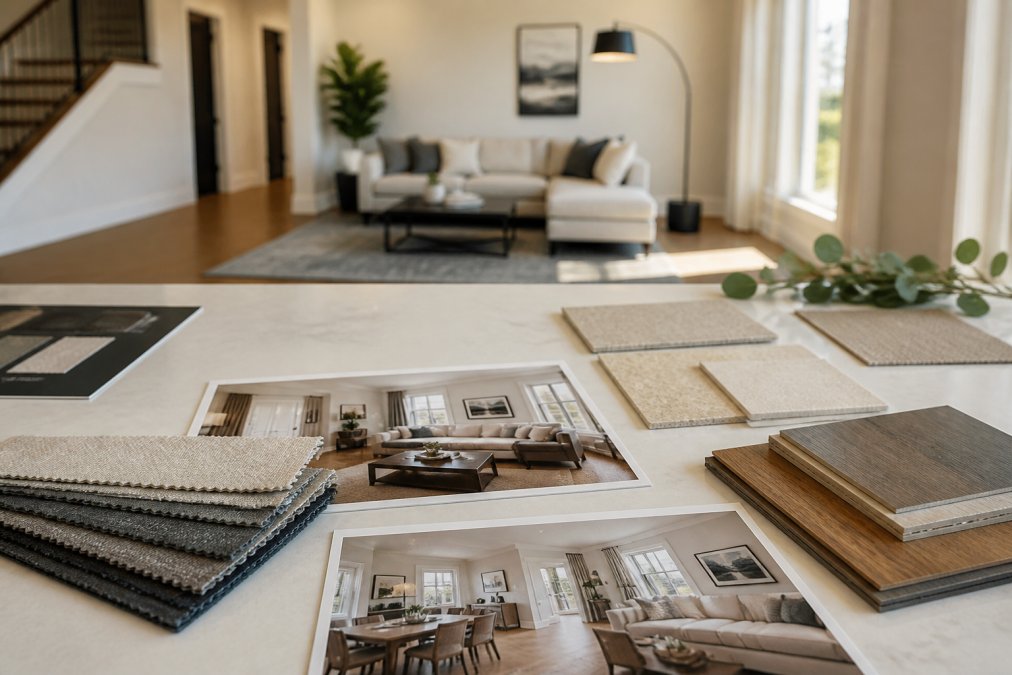
Paint is the cheapest staging tool you have. A neutral palette widens your buyer pool because it lets people project their own furniture and taste onto the walls.
Pro Tip Paint the walls, then touch up trim and doors in the same visit. Mismatched whites between walls and trim are one of the most visible flaws in listing photos, and buyers read them as sloppy maintenance.
Step 4: Plan Furniture Placement for Flow and Focal Points
Furniture placement decides whether a room feels inviting or cramped. In a vacant home you are starting from zero, which is actually an advantage: you can build the room around its best feature.

Watch Out Overfilling a room is worse than leaving it sparse. Oversized furniture makes rooms photograph smaller than they are, and buyers will assume the home is cramped.
Step 5: Optimize Lighting and Boost Curb Appeal
Light sells homes, and vacant properties are usually dark. Replace burned-out bulbs, match color temperature across a room, and clean every lighting fixture. During showings and photography, turn on every light and open every blind. Bright, airy spaces often highlight the necessity of decluttering before downsizing your home to ensure that each room feels spacious rather than crowded.
Pressure-wash the driveway, walkway, and siding
Trim shrubs, edge the lawn, and add fresh mulch
Add potted plants near the entry for color and welcome
Repair or repaint the front door and house numbers
Virtual Staging vs Physical Staging: Which Fits Your Vacant Home?
Virtual staging is the digital addition of furniture, decor, and finishes to photographs of an empty room. Physical staging places real furniture inside the property. Each solves the vacancy problem differently, and the right choice depends on your budget, timeline, and how buyers will tour the home.
Where each approach actually wins
Factor | Virtual Staging | Physical Staging |
Cost basis | Priced per photo, per image | Priced per room, per month |
Turnaround | Often next-day | Days to weeks for install |
Best for | Listing photos, MLS, portals, social | Open houses, in-person tours, video walkthroughs |
Limitation | Must be labeled as virtually staged; cannot be toured | Requires access, rental terms, and a minimum commitment |
Reusability | One image set, reusable across marketing channels | Furniture stays until the rental term ends |
The cost-benefit math most guides skip
Run the comparison on a per-room basis, not a per-home basis. A single virtually staged photo of a living room typically costs a small fraction of one month of physical staging in that same room, and the virtual image can be reused across the MLS, portals, social posts, and email campaigns for the life of the listing. Physical staging, by contrast, is a recurring monthly cost that only pays off while the home is on the market.
A simple decision framework
Tight budget, fast timeline: virtual staging for every room in the photo set, plus a clean, decluttered physical space for showings.
Mid budget, standard timeline: hybrid, physical staging in the three priority rooms, virtual staging everywhere else.
High budget, luxury or slow-moving listing: full physical staging, with virtual staging used only to preview alternate furniture layouts or to refresh photos after a price adjustment.
Occupied or partially furnished home: virtual staging is usually unnecessary; spend the budget on decluttering and professional photography instead.
The disclosure rule you cannot skip
Pro Tip Ask your virtual staging provider whether the furniture shown is to scale with the room's actual dimensions. Out-of-scale virtual furniture is one of the fastest ways to lose buyer trust once they see the home in person.
For agents managing volume, virtual staging is the practical starting point. REimage Real Estate Media pairs virtual staging with professional photography, drone imagery, and a free basic 2D floor plan with every order, with next-day delivery and 24/7 online booking, so a vacant listing can go live with complete visuals quickly.
Cost of Staging a Vacant House: Budgeting for Success
The cost of staging a vacant house depends on how much of the home you furnish and for how long. Build your budget from four line items instead:
Staging services: priced per room and per month for physical staging, or per photo for virtual staging
Rental terms: most physical stagers charge monthly, with a minimum commitment (often two to three months)
Photography and marketing: listing photos, drone shots, floor plans, and any virtual staging edits
Refresh costs: paint touch-ups, light bulbs, linens, and replacement items after each showing cycle
How to size the budget
Work backward from the number. If the budget does not support full physical staging, stage the entry, living room, and primary bedroom, and use virtual staging for the rest.
What drives the cost up or down
Number of rooms staged: the single biggest variable; each additional room adds both furniture and labor
Rental duration: every extra month on market adds another rental cycle
Furniture quality tier: luxury staging uses higher-end pieces and costs more per room
Access and logistics: stairs, tight doorways, and long carries add labor time
Season: spring and summer are peak listing seasons, and stagers may charge more or book out further
A worked example
Imagine a three-bedroom, two-bath home listed at a mid-market price. A hybrid plan might physically stage the living room, dining area, and primary bedroom, virtually stage the two secondary bedrooms and the home office, and add professional photography, drone, and a floor plan. The physical staging rental runs monthly for as long as the home is listed; the virtual staging is a one-time cost per image.
Watch Out Do not sign a staging contract without confirming the extension rate. Month-to-month extensions are common, but the rate often changes after the initial term, and that difference should be in your budget from day one.
Where to cut without hurting the listing
If the budget is tight, cut in this order: secondary bedrooms first, then the home office and bonus rooms, then the dining room. Keep the entry, living room, primary bedroom, and all listing photography. Those are the images and spaces that decide whether a buyer clicks, books a showing, and walks in with a positive first impression.
Frequently Asked Questions
Is it better to sell a house empty or staged?
Staged homes typically sell faster and for more money than empty ones. Vacant rooms can feel smaller and leave buyers unsure how to use the space. Staging vacant homes creates a welcoming atmosphere, defines each room's purpose, and helps buyers visualize living there. According to the National Association of Realtors, 81% of buyers say staging makes it easier to see themselves in a home. For vacant properties, even minimal furniture and decor can make a big difference in perceived value.
How much does it cost to stage a vacant house?
The cost of staging a vacant house varies widely based on square footage, room count, and whether you use physical or virtual staging. A hybrid approach, using virtual staging for listing photos and minimal physical pieces for showings, can be a cost-effective option. Always get quotes from local stagers or virtual staging providers to match your budget.
Can you stage a vacant house without furniture?
Yes, you can stage a vacant house without physical furniture by using virtual staging. Virtual staging digitally adds furniture, decor, and even paint colors to photos, giving buyers a clear sense of scale and layout. This is a budget-friendly option for agents who want to avoid the cost and logistics of renting furniture. However, for in-person showings, a few key pieces like an air mattress, folding chairs, or a small table can help rooms feel less empty. Virtual staging is ideal for online listings, while physical staging enhances open houses.
What is the difference between traditional and virtual staging?
Traditional staging involves renting and arranging physical furniture, art, and accessories in a home. It creates a tangible experience for open houses but requires significant time, money, and coordination. Virtual staging uses software to add digital furniture and decor to photos of empty rooms. It's fast, cost-effective, and perfect for online listings, but buyers can't touch or walk through the staged space. Many agents use both: virtual staging for the MLS and physical staging for in-person tours. The best choice depends on your budget and how quickly you need to list.
BOOK NOW


Comments